

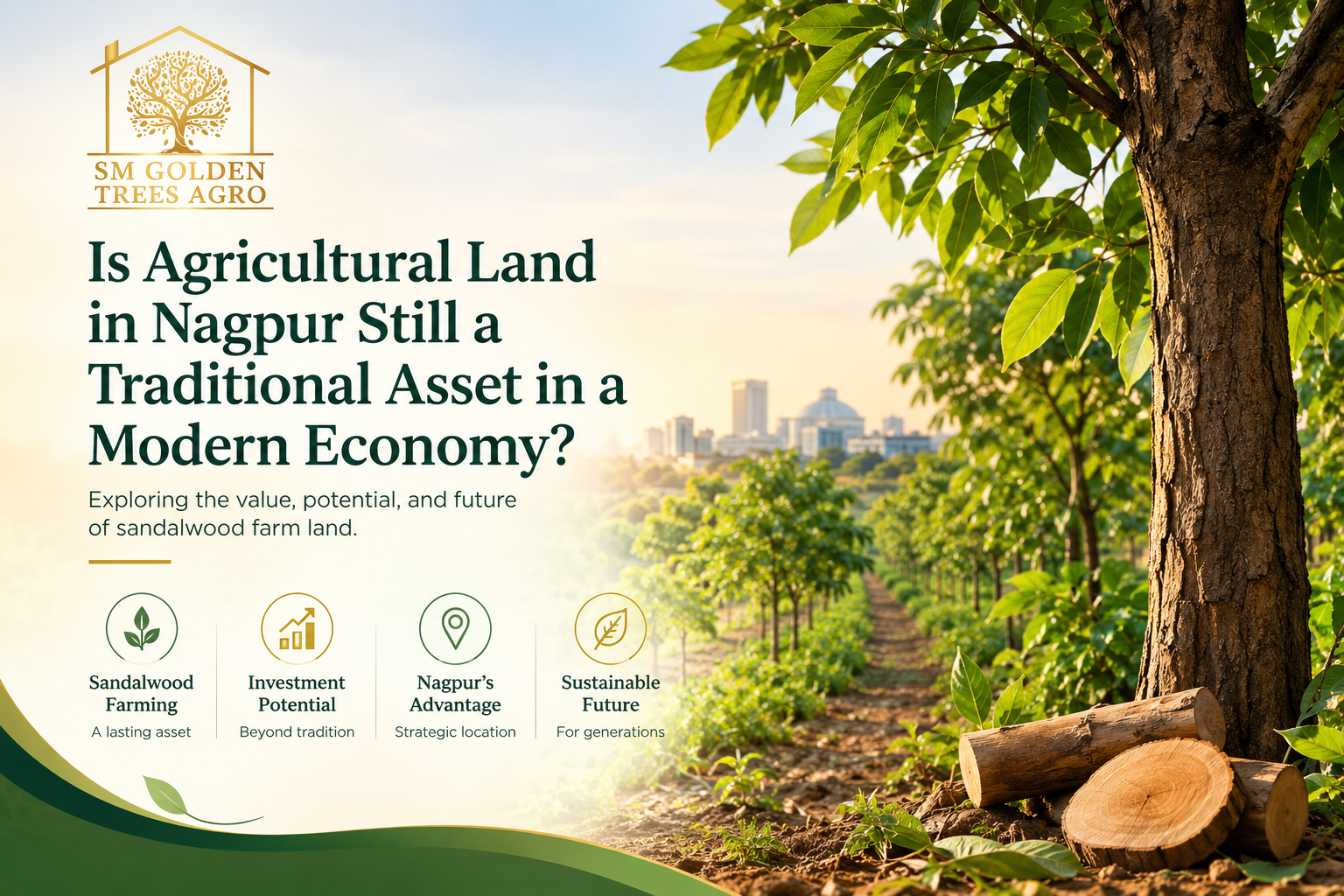
Yes, agricultural land in Nagpur is still a traditional asset, but it no longer behaves like one. It now sits at the point where old-school ownership meets new-age income.
Nagpur is the geographic centre of India, and its connectivity keeps improving. Highways, the MIHAN project and the Samruddhi Mahamarg have pulled attention toward the city’s outskirts. Buyers who once saw farmland as a family inheritance now see it as a long-term investment.
That shift explains why agricultural land near Nagpur gets so many enquiries today. Some people want a weekend retreat. Others want steady appreciation or income from plantation crops like sandalwood.
What you will learn: why agricultural land in Nagpur still holds value, how it compares with plots, what sandalwood farming adds, and the exact steps to buy with confidence.
Is Agricultural Land in Nagpur Still a Traditional Asset?
Yes. Land is one of India’s oldest stores of value, and agricultural land in Nagpur still fits that role.
The difference is how people use it. Earlier, owners farmed it themselves or leased it out. Now many buyers hold it for appreciation and plant long-gestation crops.
Land doesn’t expire, and it can’t be printed. That’s a big reason investors keep coming back to it.
Traditional traits that still apply:
- Tangible, physical ownership
- Limited supply in a growing region
- Passed easily across generations
- Not tied to daily market swings
Why Is Agricultural Land in Nagpur Gaining Value?
Agricultural land in Nagpur is gaining value mainly because of infrastructure, location and rising demand for land outside crowded cities.
Nagpur sits on major north-south and east-west corridors. Better roads mean farmland that once felt remote is now a short drive from the city.
Industrial and logistics growth around MIHAN has also widened the buyer pool. More jobs bring more people, and more people eventually want space outside the city.
Key value drivers:
- Connectivity: expressways and highway upgrades
- Central location: easy reach to multiple states
- Employment hubs: MIHAN and allied industries
- Lifestyle demand: farmhouses, retreats and plantations
Should You Buy Agricultural Land or Plots in Nagpur?
It depends on your goal. Choose agricultural land for long-term growth and income, and residential plots if you want to build soon.
Many people searching to buy plots in Nagpur actually want a different kind of asset than what plots offer. A plot is for construction, while agricultural land is for holding, growing and earning.
| Factor | Agricultural Land | Residential Plot |
| Purpose | Cultivation, plantation, investment | Home construction |
| Entry cost | Often lower per sq. ft. | Usually higher |
| Income potential | Yes, through crops | None until built |
| Holding style | Long-term | Short to medium term |
| Legal checks | Land-use and buyer eligibility rules | Layout and NA approvals |
Price per square foot isn’t the whole story. Agricultural land can give you more area for the same budget.
What Makes Sandalwood-Farmed Land in Nagpur Different?
Sandalwood-farmed land combines land ownership with a high-value plantation crop, which is why many investors prefer it over bare land.
Sandalwood is a slow crop. It typically takes well over a decade to mature, and it needs suitable host plants. That patience is exactly what rewards long-term holders.
SM Golden offers sandalwood-farmed land in Nagpur for buyers who want more than an empty plot of soil. You’re buying land that already has a purpose and a plan.
What the sandalwood model gives you:
- A plantation-ready asset, not just open land
- Long-term potential from a premium timber crop
- Land that appreciates while the trees grow
- A greener, low-maintenance holding
Always confirm current regulations on sandalwood harvesting and sale before you invest. Rules differ by state and change over time.
How Do You Buy Agricultural Land in Nagpur? Step-by-Step
Start by verifying the title and your eligibility, then inspect the land, and only then pay.
Maharashtra has specific rules about who can buy agricultural land. Get this checked by a local advocate before you commit.
- Define your goal. Decide between investment, plantation or a farmhouse.
- Set a budget. Include registration, stamp duty and legal fees.
- Shortlist locations. Compare agricultural land near Nagpur by road access and water.
- Visit the site. Check soil, boundaries and the approach road.
- Verify documents. Review the 7/12 extract, ownership history and encumbrances.
- Confirm eligibility. Make sure you’re legally allowed to purchase.
- Sign and register. Complete the sale deed at the sub-registrar’s office.
- Update records. Get the mutation entry done in your name.
Buying from an established seller like SM Golden also reduces paperwork guesswork.
What Risks Should You Check Before Buying?
The biggest risks are unclear titles, wrong land-use classification and poor access. All three can be checked before you pay.
- Disputed ownership: Ask for 30 years of records.
- Zoning issues: Confirm the land is truly agricultural.
- No road access: An unreachable plot is hard to resell.
- Water availability: Plantations need reliable irrigation.
Conclusion
Agricultural land in Nagpur is still a traditional asset, now with modern earning potential. It maintains the stability of land ownership and adds growth from infrastructure and plantation crops.
Key takeaways:
- Agricultural land in Nagpur is gaining value through better connectivity and demand.
- Agricultural land suits long-term investors, while plots suit people who want to build.
- Sandalwood-farmed land adds a productive, long-term layer to your investment.
If you’re considering agricultural land near Nagpur, a site visit is the best first step. Connect with SM Golden to explore sandalwood-farmed land and see what a smarter land investment looks like.
FAQ: Agricultural Land in Nagpur
Is agricultural land in Nagpur a good investment?
Yes, for long-term buyers. Better infrastructure and limited supply support steady appreciation. Returns aren’t guaranteed, so always compare options and verify documents.
Can anyone buy agricultural land in Nagpur?
Not always. Maharashtra restricts agricultural land purchases in certain cases, often tied to agriculturist status. Check current eligibility rules with a local legal expert before buying.
What is the cost of agricultural land near Nagpur?
It varies widely by location, road access and water availability. Land closer to highways and the city usually costs more. Ask for recent registered deals nearby to benchmark.
Is it better to buy plots in Nagpur or agricultural land?
Buy plots if you plan to build soon. Choose agricultural land if you want a long-term hold with plantation income potential.
Is sandalwood farming profitable on agricultural land in Nagpur?
It can be, but it’s a long-term crop that takes many years to mature. Profit depends on tree care, host plants and legal harvesting rules. Plan for patience, not quick returns.
Why choose SM Golden for agricultural land in Nagpur?
SM Golden provides sandalwood-farmed land in Nagpur, giving buyers a plantation-ready asset rather than bare ground. You can visit, ask questions and understand the plan before deciding.